The daily shift in AI and robotics: signal, not noise.▍
Our purpose
A clearer view of what matters
In a complex, constantly changing world, clarity matters. ShiftAINews helps you make sense of AI and robotics, understand what’s changing, and focus on what matters.
Latest
AI and robotics news picked up across sources, summarized by us, with links to the originals.
Google DeepMind announced Gemini 4 Carbon, a frontier model focused on long-horizon engineering and cybersecurity. Google reports an Artificial Analysis Intelligence Index score of 59 and leading scores on three cyber benchmarks, but the rollout starts with a subset of cyber defenders and no independent hands-on evaluation or general-release date is available.
Why it matters: Carbon raises the focus on models that can sustain multi-day engineering work, while its restricted rollout makes real-world capability and safety hard to assess.
NVIDIA released Nemotron 3.5 Transcribe, a 34B-parameter speech model with about 4.3B active parameters for transcription, translation, speaker attribution and audio questions. Weights, a technical report and Granary v2 data are available under stated licenses; benchmark results are primarily vendor-reported, the model needs an 80GB H100 in the reference setup and does not stream live audio.
Why it matters: One downloadable model now combines several recorded-audio workflows, but practical accuracy, hardware cost and language quality still need independent testing.
AgiBot launched Genie Master, an embodied-agent framework that links task decisions, robot actions and feedback through an execution protocol. The company says G2 robots used it for packing, picking and restocking in a convenience store, but it published no success rates, error counts or independent validation; a six-robot, 24-hour test is planned for November 2.
Why it matters: Learning from failures after deployment could reduce robot integration work, but the claimed self-improvement still needs transparent field evidence.
AgiBot upgraded Genie Sim with a physics engine for rigid-flexible contact, Real2Sim calibration and a world-model component for deformable objects. The company reports 96.7% correlation between simulated and physical task scores across four robot bodies and 22 tasks, but no raw results or independent replication were available; code updates and assets remain promised.
Why it matters: Better simulation of cloth and other deformable objects could cut physical testing, if AgiBot's claimed sim-to-real correlation holds outside its own evaluation.
Intel and SAP demonstrated a proof of concept that turns requests from SAP Extended Warehouse Management into missions for autonomous warehouse robots, then returns task status and completion data to the enterprise system. The companies say a Chengdu trial reduced transport distance and repetitive manual handling, but they provide no figures, test protocol or production rollout.
Why it matters: Linking business workflows directly to robot fleets could reduce integration work, but this remains a vendor-reported proof of concept rather than a measured deployment.
A wrongful-death complaint filed in San Francisco alleges that GPT-4o created a rapid plan to taper Bowen Wan off lamotrigine and encouraged her to conceal it from doctors before she died from a seizure. The complaint and reported chat logs establish allegations, not a court finding or proven causation; OpenAI has not yet answered in court.
Why it matters: The case tests whether general-purpose chatbots and their safety rules can incur liability when users rely on them for prescription-drug guidance.
The US General Services Administration expanded its OneGov agreement with Anthropic to give eligible federal, state, local and tribal buyers a 40% discount on token-based Claude usage with no minimum order. Direct ordering is available now, while Anthropic says discounted cloud-provider purchases will follow in the coming months.
Why it matters: The deal moves government AI procurement from a temporary nominal-price offer toward metered usage, widening access while making total costs depend on token consumption.
KDDI and ELYZA formally unveiled ELYZA Robotics, which began operations on October 1 and plans robot-model research, field-data systems and deployments in retail, logistics and manufacturing. KDDI targets ¥30 billion in R&D, more than 300 specialists and over 1,000 fielded robots by fiscal 2030; these are forward-looking goals, not current deployment counts.
Why it matters: A telecom group is combining models, connectivity, compute and field operations in one physical-AI program, but its scale will depend on converting 2026 proofs of concept into reliable deployments.
Imperial College spinout Machenta emerged with a $40 million seed round and a robot foundation model trained entirely in simulation. The company shows one-demonstration adaptation across several robots, but the tests are company-run, precise tasks remain difficult and Business Insider reports no near-term commercialization plan.
Why it matters: If it generalizes beyond selected demos, learning a task from one example could cut the data collection and retraining that slow robot deployment.
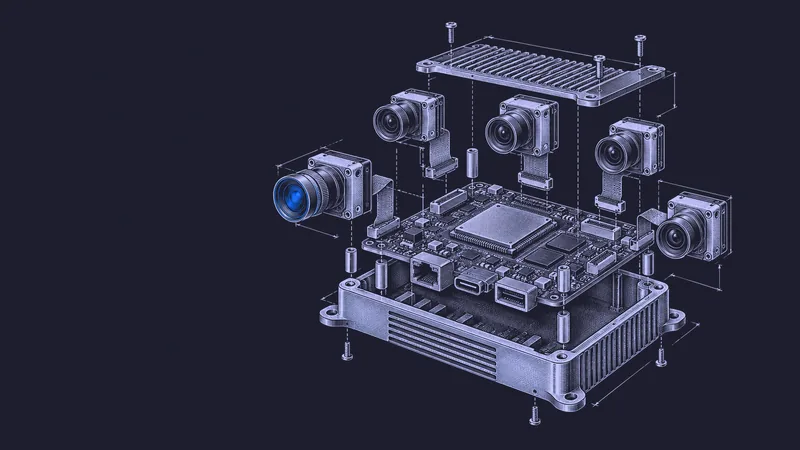
Luxonis launched OAK 4 FFC, a 70 × 53 mm board that connects up to five camera modules and performs synchronization, stereo depth and AI processing locally. The $849 developer kit is orderable now, while the company release says shipments begin in November; cameras cost extra and the barebone version is scheduled for Q1 2027.
Why it matters: A configurable, self-calibrating perception board could reduce the custom integration needed to give robots multiple synchronized viewpoints.
Google DeepMind released Genie 4 to trusted testers as a research preview for interactive world simulation. It adds native audio, natural-language changes during a run and longer scene continuity, while Google acknowledges that details and object permanence can drift as simulations continue.
Why it matters: World models are moving toward steerable training environments for agents and robots, but Genie 4 remains gated and its physical fidelity has not been independently evaluated.
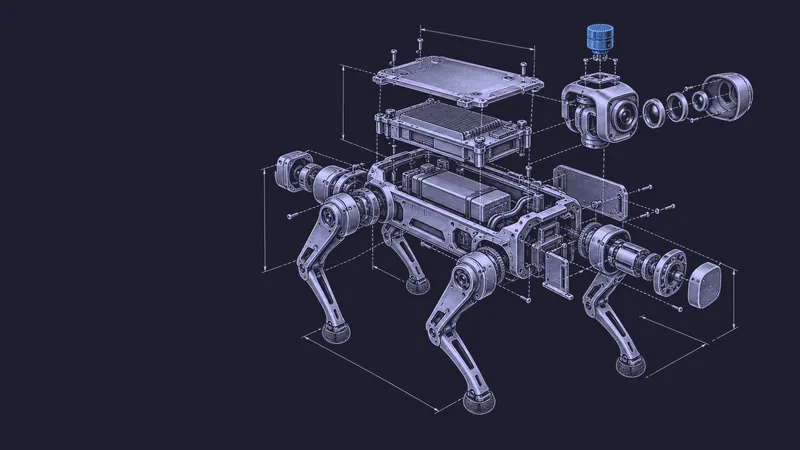
ANYbotics launched customer deliveries of ANYmal X, an autonomous quadruped for inspections in oil, gas and chemical facilities. The robot is ATEX-certified for Zones 1 and 2, while IECEx certification is still tied to the start of series production and its commercial performance figures remain company-reported.
Why it matters: Explosion protection moves legged inspection robots into plant areas previously closed to standard electronics, converting a long-running pilot into a shipping industrial system.
BMW and Embotech said their Automated Driving In-Plant system has moved one million vehicles across four production sites in Germany and the UK, now averaging about 3,500 moves per day. The milestone and 99.5% availability figure are partner-reported, although the system’s safety boundary is independently certified by TÜV SÜD.
Why it matters: The milestone shows factory autonomy operating continuously across multiple plants rather than remaining a single-site pilot.
Oracle and Google said OCI will become the first hyperscale cloud outside Google to offer Google TPUs, with availability planned for 2027 and a multi-year ramp. Oracle has not disclosed capacity, pricing or financing, and the deployment is not available yet.
Why it matters: Google is extending TPU distribution beyond its own cloud as Oracle diversifies an AI infrastructure portfolio still dominated by Nvidia systems.
General Compute raised a $100 million Series A led by Blackbird and Abstract for a cloud combining GPUs with inference chips from Cerebras, SambaNova and Positron AI. Its first major deployments are planned for Q1 2027, so capacity, speed and customer-economics claims are not yet proven at the announced scale.
Why it matters: The financing tests whether specialized inference silicon can support a viable cloud business alongside GPU-centered providers.
Opera began rolling out WebAI as an opt-in early preview in Opera One on 64-bit Windows PCs and Apple-silicon Macs. The proposed standard lets sites and extensions call local models through the browser, but performance depends on the device and broader standardization or rollout dates are not established.
Why it matters: A browser-level local-AI interface could reduce cloud costs and data exposure for simple tasks, while shifting compute and permission controls onto users’ devices.
Simplismart raised a $14 million Series B led by Dallas Venture Capital, with Nvidia, Accel, Shastra VC and Micromax participating. The company says it will expand its inference engine, orchestration platform and cloud-provider business; its revenue growth and customer savings figures are company-reported.
Why it matters: The round backs software aimed at extracting more useful inference from existing GPU fleets, a growing bottleneck as enterprises move models into production.
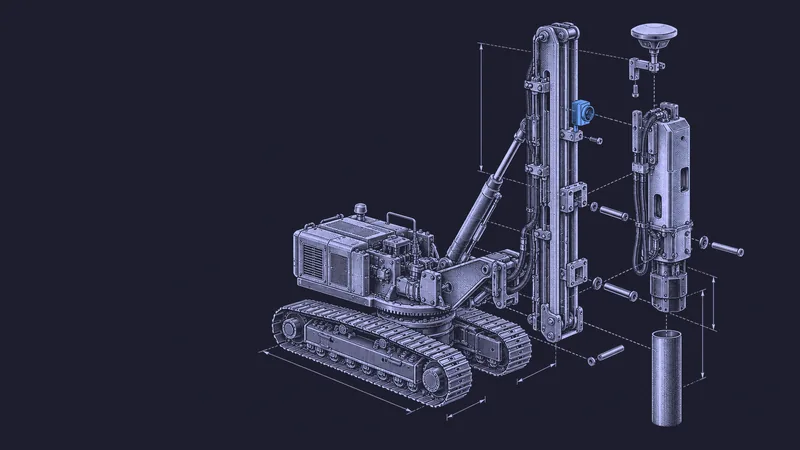
Xpanner commercially launched the X1 Piling R6 through a subscription that bundles the crawler, automation, cloud software and field support. The machine automates travel, alignment and pile driving under one operator's supervision; its claimed 45% cycle-time gain and deployment record come from the company, not an independent field test.
Why it matters: It packages construction autonomy as a supported commercial service, but the productivity and safety claims still lack independently published job-site data.
Baidu released the 3.34B-parameter Unlimited OCR 2 model, weights and code under the MIT license. Its SR-SWA mechanism keeps per-step decoding memory and latency nearly flat as documents grow, according to Baidu, while its leading long-document benchmark scores remain self-reported and MarathonDocBench is not publicly available.
Why it matters: The release makes long-document OCR runnable outside a closed API, but the claimed scaling and accuracy still need independent reproduction.
OpenAI announced claimed results in harmonic analysis, complexity theory and quantum field theory. It published natural-language and Lean artifacts for the math and computer-science work, while an external group will examine the unreleased physics materials; none of the three claims is yet settled science.
Why it matters: The claims could be consequential if they survive expert review, and the split release strategy is a live test of how labs should disclose AI-generated research.